From Operator to Conductor
By Salim Jernite · · 3 min read
The job that replaces the job.
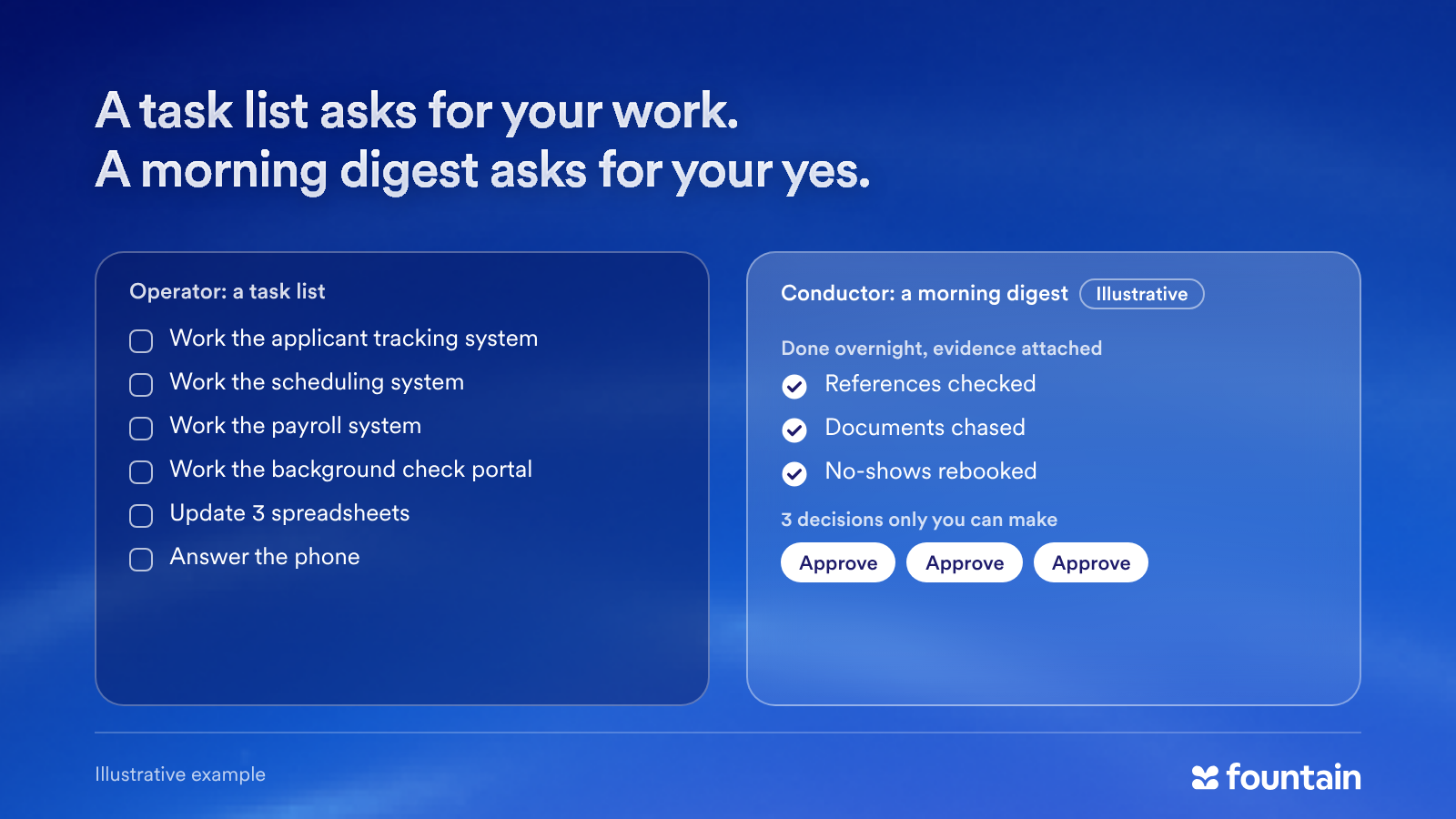
Spend a day with a frontline operations manager and count the tools. An applicant tracking system, a scheduling system, a payroll system, a background check portal, three spreadsheets, a phone that never stops. Software gave this person better instruments every decade, and every decade the job stayed the same: work the tools, all day, yourself.
Agents invert that. When software does the work, the human stops operating the tools and starts directing the work the tools do. We call this role the conductor: one person directing many agents, validating the calls that matter, and spending the recovered time where a human is the value. A conductor plays no instrument during the performance. The conductor decides what gets played, sets the tempo, and hears the whole piece at once.
The conductor's surface is a morning digest.
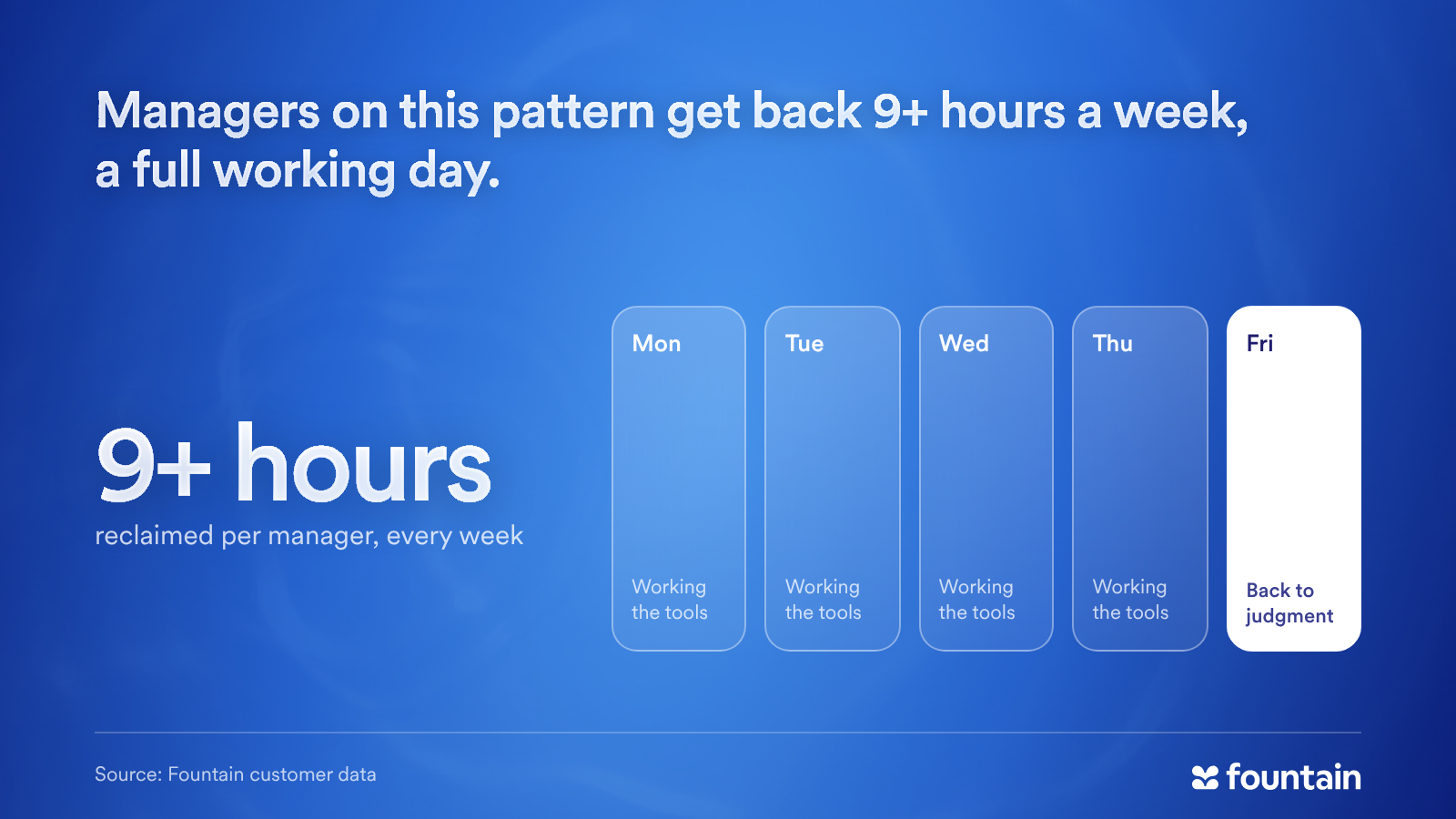
The conductor's surface is a morning digest, and it reflects a design rule I hold every team to, internally and in the product: surface work already done and awaiting a yes, ahead of work still to do. A task list says here is what you must do today. A digest says here is what happened overnight, here is the evidence, and here are the three decisions only you can make. The difference sounds small. It is the entire shift, from doing the work to governing it. Across our customer base, managers running on this pattern reclaim more than nine hours a week, a full working day returned to judgment.
There is a ladder every person climbs.
There is a ladder every person climbs on the way to the podium, and we watch people climb it daily, inside Fountain and across our customers:
Ask. An agent helps you do your work. You are faster.
Delegate. An agent does a defined task end to end. You review.
Encode. Your judgment becomes the agent's playbook. The way you triage, escalate, and decide is written down and runs without you.
Orchestrate. Agents hand work to each other. You design the system instead of performing the tasks.
Govern. Your whole scope runs. You validate what matters and improve the system that does the rest.
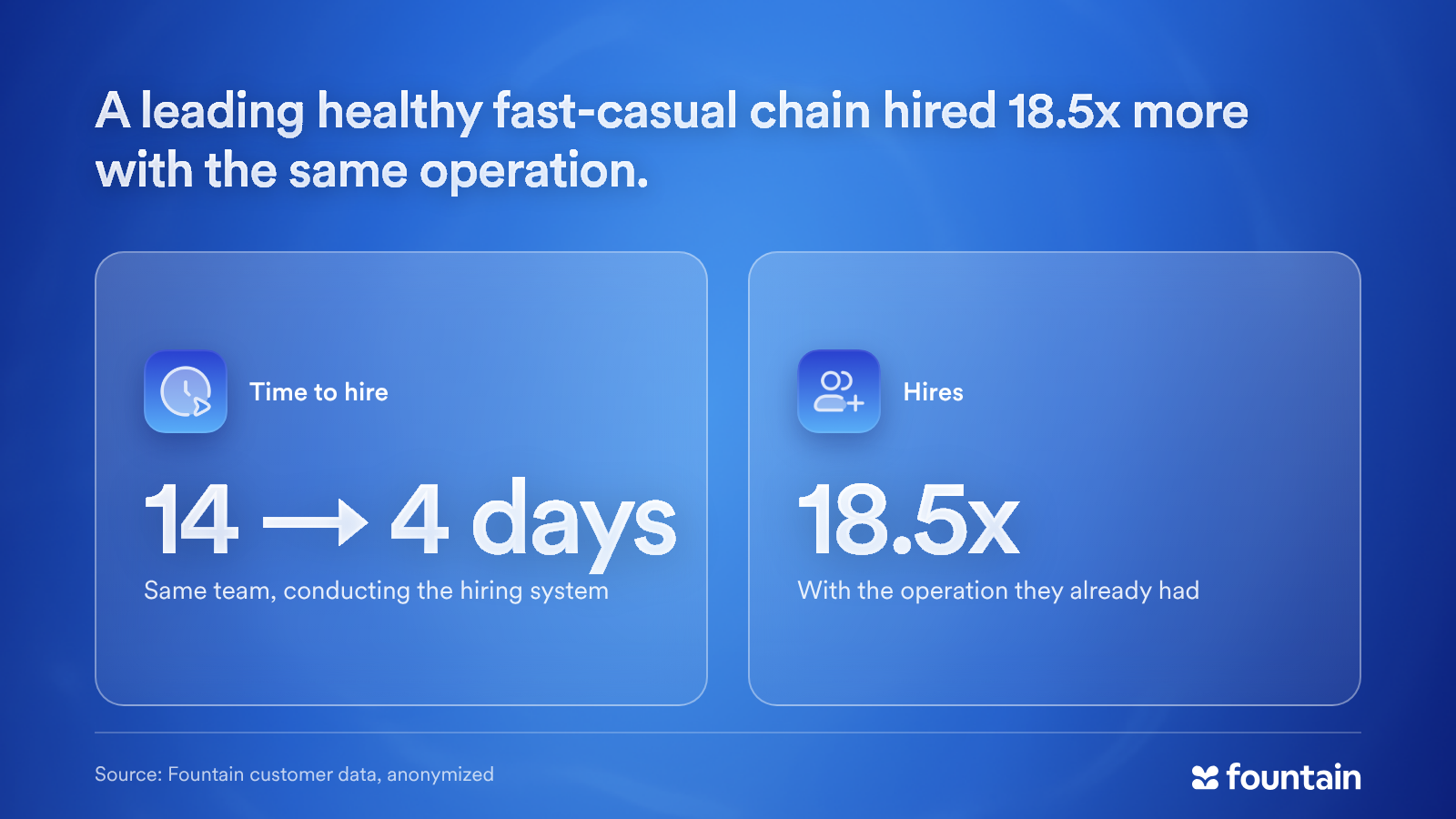
The output difference between the bottom and the top of that ladder is not a percentage. At sweetgreen, conducting the hiring system instead of operating it cut time to hire from 14 days to 4 and multiplied hires 18.5x with the operation they already had. The same people, a different altitude.
Who climbs first?
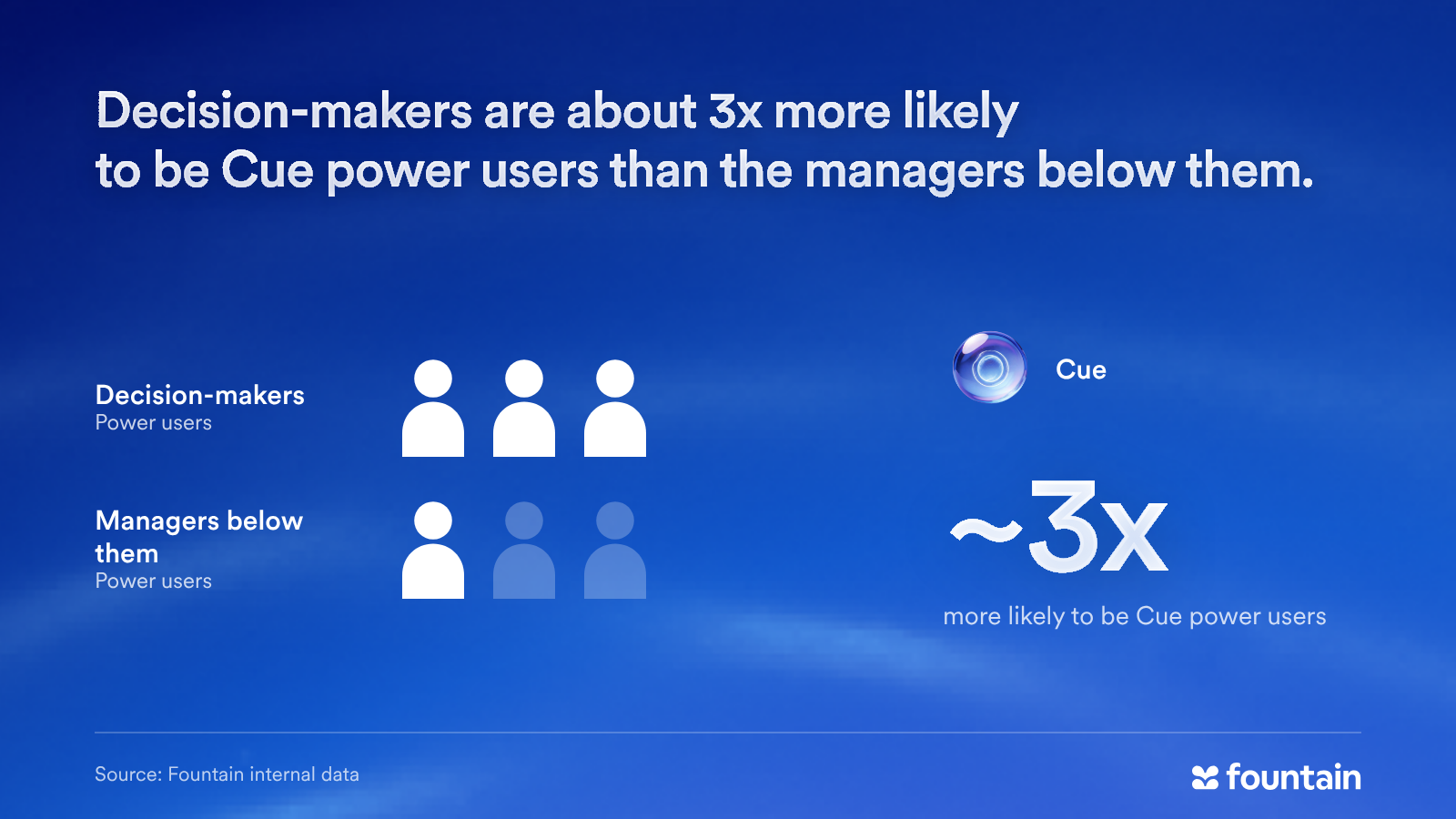
Who climbs first? The data surprised me, then made sense. Inside Cue, decision-makers are roughly three times more likely to be power users than the managers below them. The people with the most authority adopted execution first, and I think the reason is simple: their job was already deciding. An executive has spent a career reading digests, weighing evidence, and saying yes or no. Agents give everyone else the working conditions executives always had: staff.
What makes a good conductor?
What makes a good conductor? Three skills, and none of them is prompt engineering.
Legible judgment. You cannot encode a playbook you cannot articulate, so the people who thrive are the ones who can say why they decide what they decide.
Knowing what to validate. The discipline to let reversible work run and to slow down only where consequences are real.
Taste for exceptions. The ability to scan thirty completed tasks and find the one that should never have happened.
The conductor is a promotion.
The conductor is a promotion, and I want to be precise about for whom. It is a promotion for the coordinator whose judgment becomes the playbook that runs a hundred times a day. It is a threat only to the idea that a job is a bundle of repetitive tasks. Roles built mostly from such tasks shrink. People whose judgment can be encoded and multiplied become more valuable than they have ever been.
We did not theorize this role and then go looking for evidence. We staffed it, on ourselves, across every function of the company. That is the next chapter.
Chapter 4, Customer Zero, is coming soon