The Autonomous Company
By Salim Jernite · · 4 min read
What comes after the system of record.
For forty years, frontline software was a system of record. The operator did the work; the software kept the score. Every generation of enterprise software made the record more complete: better databases, better dashboards, better reports about work a person still had to do. The applicant tracking system tracked.
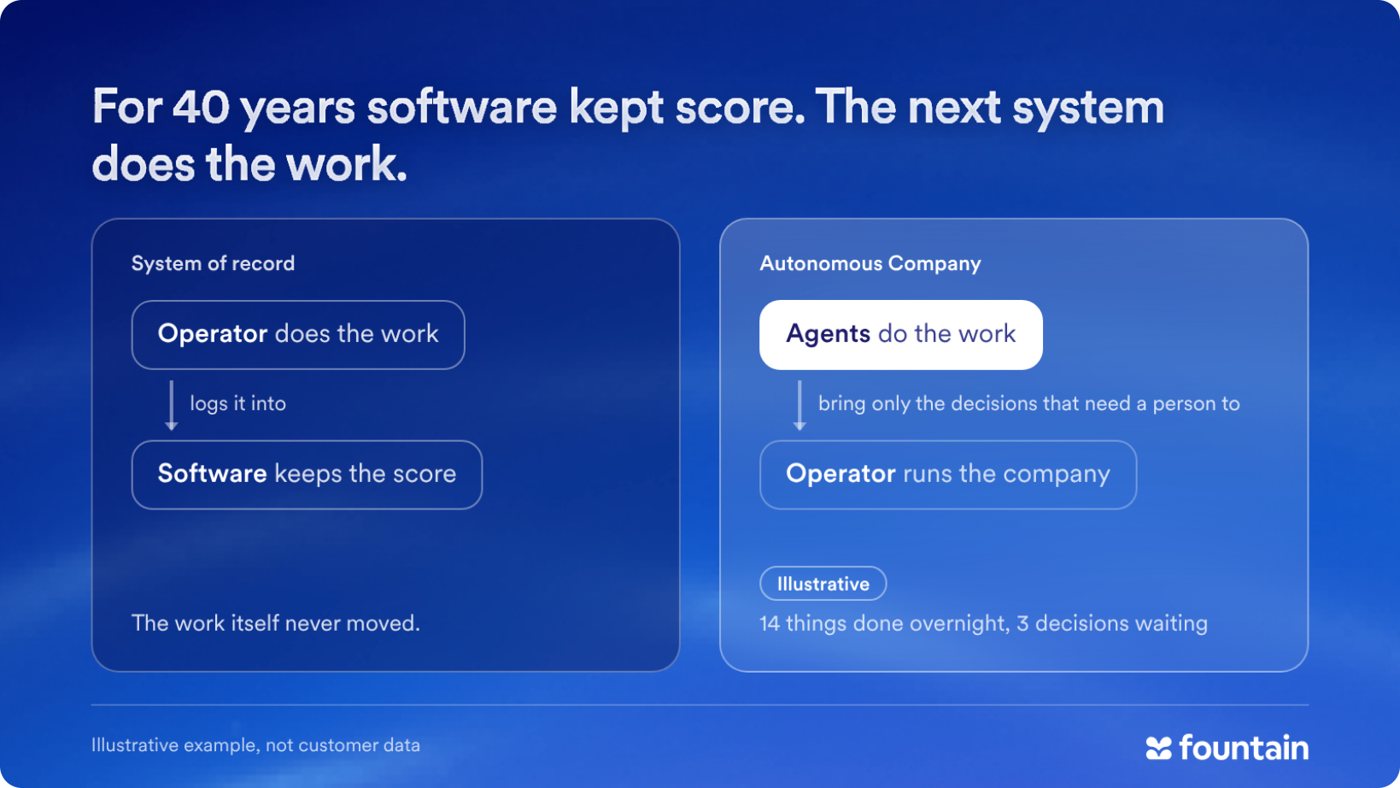
The scheduling system displayed a calendar someone else filled. The compliance system stored documents someone else chased. The work itself never moved.
We are building the system that does the work. I call it the Autonomous Company: an operation that studies itself, staffs itself with software agents, runs itself day and night, and brings a human only the decisions that need one.Here is what it looks like from the inside.
An operations leader opens Fountain in the morning to work already done. Fourteen things completed overnight: references checked, documents chased, no-shows rebooked, expiring certifications flagged and renewals started. Three decisions are waiting, each with the evidence attached to decide in seconds. That moment, repeated daily, is the product.
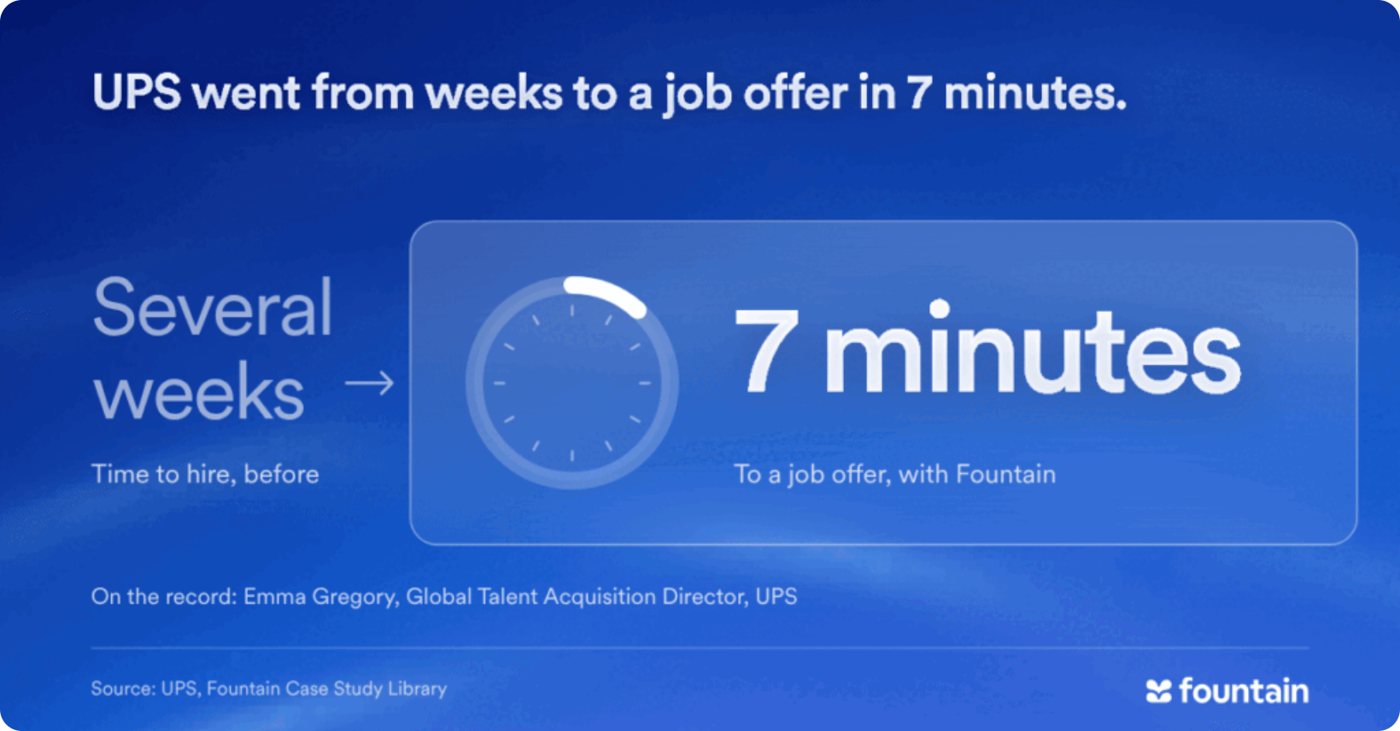
This is not a forecast. At UPS, time to hire went from several weeks to a job offer in seven minutes, on the record from their Global Talent Acquisition Director, at a scale of up to 40,000 hires in a single week.
And the pattern is bigger than us: Klarna’s AI assistant absorbed two thirds of all customer service conversations in its first month, 2.3 million of them, the equivalent work of 700 full-time agents, with resolution times falling from 11 minutes to under 2. Execution is moving to agents across the economy. The question is what system it moves into.
Underneath ours is a specific mechanism. Cue, our agentic interface, analyzes the operation: the systems it connects to, the tasks that repeat, the reports pulled by hand, the follow-ups that slip. From that picture it proposes the agents worth creating, each one scoped to a single outcome an operator already owns: fewer drop-offs on an opening, a shift covered before it runs short, a compliance question answered the moment it is asked. The operator reads the proposal, its access, its limits, and taps once. From then on, agents fire on triggers when events happen, on schedules when work recurs, and on demand when someone asks. When something genuinely needs a person, it lands in one place.
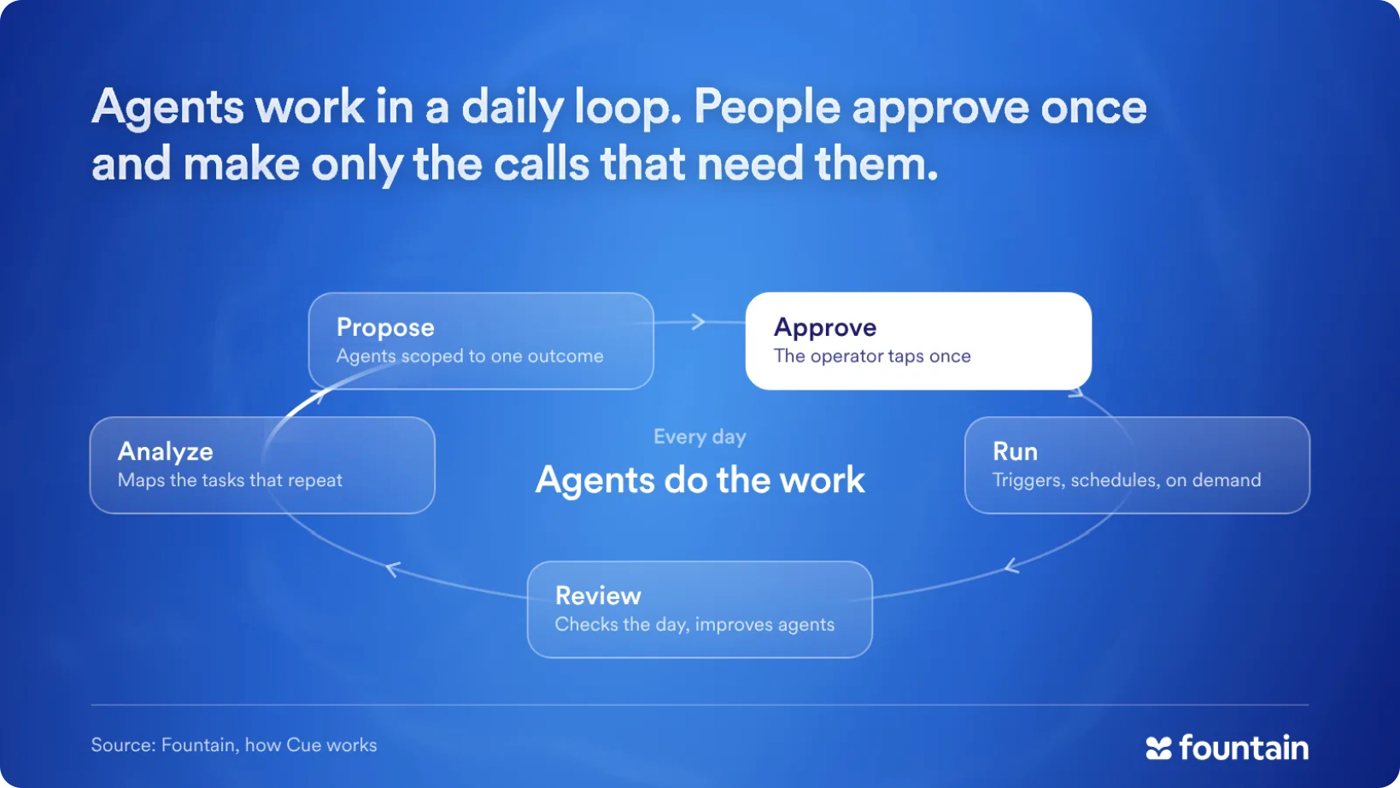
And every day the system closes the loop. It reviews yesterday’s work against the operation’s objectives, adjusts the plan, improves the agents, and proposes new ones as the operation changes. The system does the work. The human runs the company.
Why start with frontline operations?
Because the gap between importance and investment is the widest in the economy: 80 percent of the global workforce is frontline, yet nearly all of what businesses spend on software each year serves desk workers. No part of the economy carries more administrative drag per dollar of output. Hiring at volume, onboarding, compliance, scheduling, and retention run across a dozen systems that were never designed to talk to each other, under regulations that change city by city, at a pace where a day of delay loses the candidate. Frontline operators were the last to be served by every software wave. They will be the first served by this one, because the work is exactly what agents do best: repetitive, rule-dense, urgent, and endless. Fountain runs this work today for more than 400 frontline accounts, hiring over 1.2 million workers a year.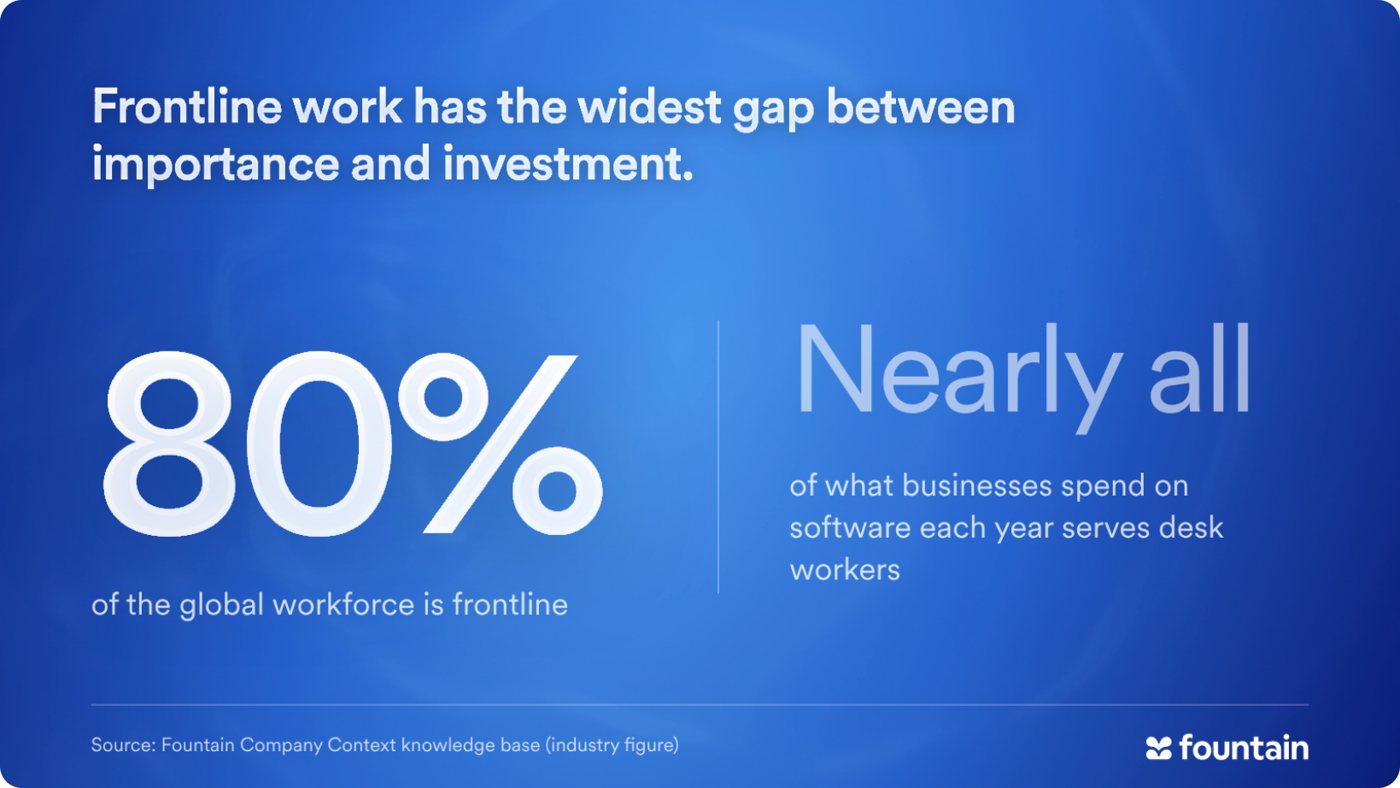
One more reason to believe the destination is real: we live in it. Fountain runs on roughly 80 of its own agents, in production, across every function of the company. Every function operates on the same loop we sell. I will write about that in detail later in this series, because I believe running your company on your own product is the only honest way to build in this category.
The system of record was a forty-year era, and it earned its place: you cannot automate an operation you never measured. But keeping score was always step one. The work is next.
A company that can run itself raises an obvious question, and it deserves a serious answer instead of a slogan: what happens to everyone in it? That is the next chapter.
Chapter 3, From Operator to Conductor, is coming soon